Pouches

Kraft Stand Up Pouches

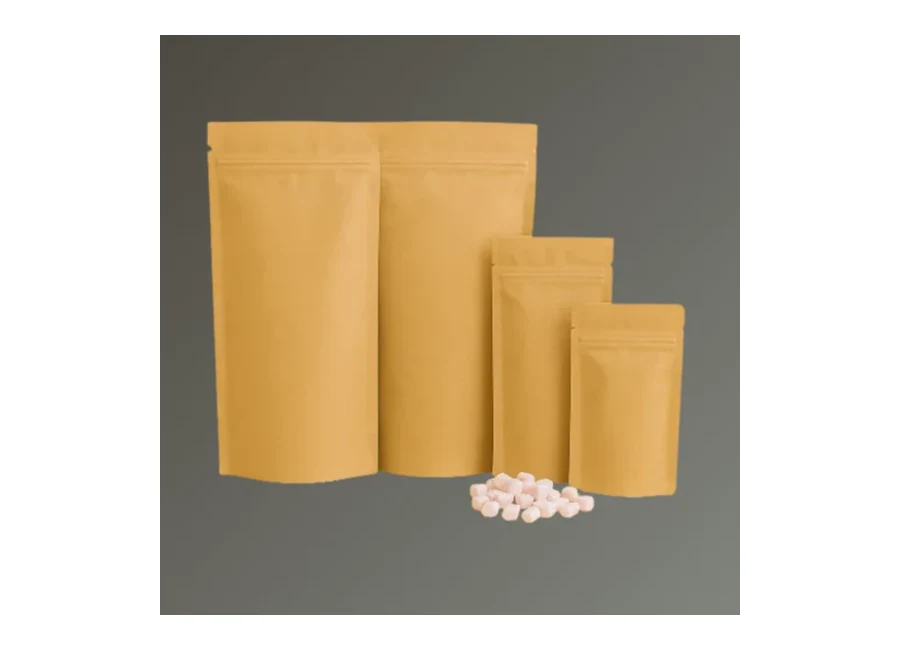
Format: Brown kraft stand-up / box pouch · Features: Quad-sealed box-shaped pouch; options with or without one-way degassing valve

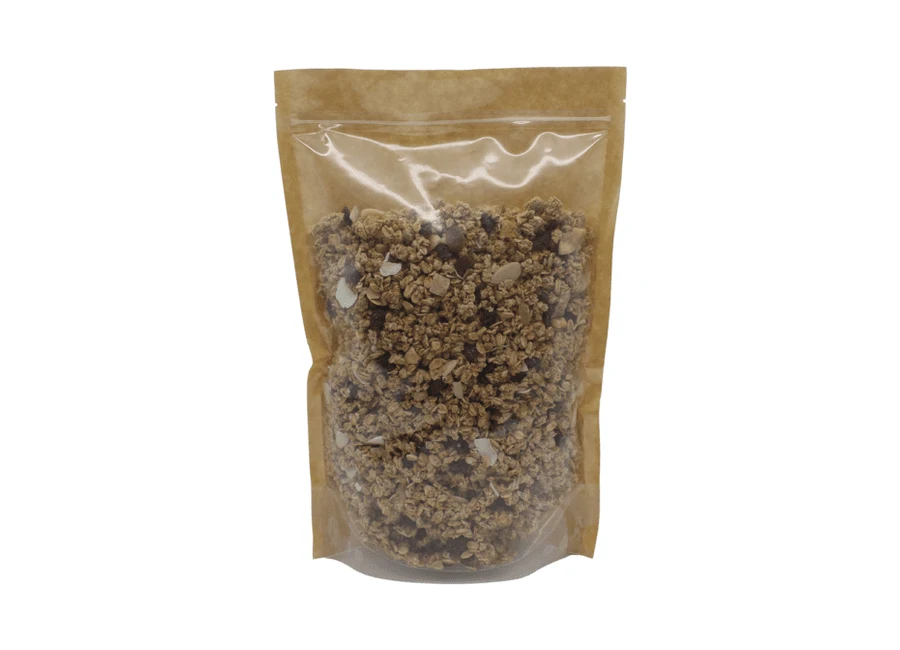
Kraft Stand Up Pouches product photograph
Contact for price
Specification, colour, compatibility, VAT, delivery and lead time should be confirmed before ordering.

Product details

Contact Stockpack for pricing on Kraft Stand Up Pouches. Stand-up pouch packaging for dry goods, coffee, tea, grains, powders and food-grade applications.

FormatBrown kraft stand-up / box pouch
Capacity options125 g, 250 g, 500 g
FeaturesQuad-sealed box-shaped pouch; options with or without one-way degassing valve
Use caseCoffee, gifts, pasta, pulses and grains, tea
Related products

More pouches

Pouch approval guide

Turn the kraft stand-up pouch description into a testable specification.

The known product description is a brown kraft stand-up or box pouch offered in 125 g, 250 g and 500 g options, with a quad-sealed form and versions with or without a one-way degassing valve. These details provide a starting point; final approval requires the exact dimensions and material construction for the selected size.

Capacity depends on the product

A gram value is not a fixed pouch volume. Coffee beans, ground coffee, tea, pasta, pulses and grains have different bulk densities, particle shapes and settling behaviour. Confirm the intended fill weight with the actual product and leave the headspace needed for clean sealing. Where presentation is important, check how the filled pouch stands, panels and settles after transport.

Establish the full material structure

“Kraft” may describe an appearance or an outer layer rather than the complete pack. Ask for the layer structure, sealant, barrier, adhesive, inks, zipper and valve materials for the exact option. A mono-material, recyclable, recycled-content, compostable or biodegradable statement should only be used where the dated supplier evidence covers that complete construction and the intended market context.

Filling and sealing

Record the pouch opening, base or side gusset, seal width, zipper position, valve position and dimensional tolerances. Product dust, oils or particles in the sealing area can affect integrity. Trials should define the sealer type, temperature, dwell, pressure and cooling used for the accepted result.

Handling and coding

For manual or automatic packing, check opening reliability, grip area, fill-head access, settling, top-seal presentation and discharge. Confirm the printable or label area and whether coding will be applied before or after filling.

Information for a Lancing quotation

  • Exact pouch size and required fill weight for the real product.
  • Product bulk density, dust, oil, aroma and barrier requirements.
  • Valve requirement and position, zipper, tear notch and finish.
  • Manual or automatic filling and sealing method and target output.
  • Order quantity, delivery pattern and approved artwork or label route.
  • Material declaration and evidence required for any environmental wording.

Compare the wider pouch range, label options, secondary packing film, the evidence guide and the compatibility guide.

Buyer questions

Are the stated gram capacities exact?

The listed 125 g, 250 g and 500 g options depend on the product bulk density and how the pouch is filled. Confirm the required dimensions and test the actual product rather than relying on a nominal gram description.

Does the kraft appearance prove that the pouch is paper recyclable?

No. The appearance does not identify the complete structure. Obtain a declaration covering the layers, coatings, adhesive, zipper and any valve before making a material or end-of-life statement.

When is a one-way degassing valve relevant?

It may be considered for products that release gas after packing, such as some coffee applications, but the need, valve position and performance must be confirmed for the exact product and process.

What is needed for a sealing trial?

Supply representative pouches and the actual product or a safe equivalent. Record fill weight, product dust or oil, seal contamination, sealing temperature, dwell and pressure, then define the seal-integrity acceptance method.

Can this pouch run on automatic equipment?

That depends on the dimensions, tolerances, opening behaviour, surface friction, zipper or valve position and presentation method. A machine trial is required for automatic handling.

When should another pouch construction be considered?

Use another structure where the required barrier, chemical resistance, fill temperature, puncture resistance, seal performance or verified end-of-life route cannot be met by this format.

Extended approval checks

Confirm the complete kraft-look pouch structure, seal and product protection.

A paper appearance or kraft description does not establish the layer structure, barrier, recyclability or product-contact scope. Obtain the exact construction and test the filled pouch through sealing, storage and distribution.

Does kraft appearance describe barrier performance?

No. Barrier depends on the full material structure, thickness, sealant, zipper, valve or window and test conditions. Use the barrier and shelf-life guide.

Why test a filled pouch in distribution?

Flexing, puncture, abrasion and load can expose seal or structure weaknesses. Include the actual product and route in a distribution test.